"I Could Only See Sky”: What a Steep Hill Taught Me About Torque
I drove a Toyota Land Cruiser FJ up a hill so steep I could see nothing but sky. Horsepower or torque? Here’s the difference, explained so anyone can follow.
Share
Seeing the Sky during a Hill Climb
By Selorm Attatsi
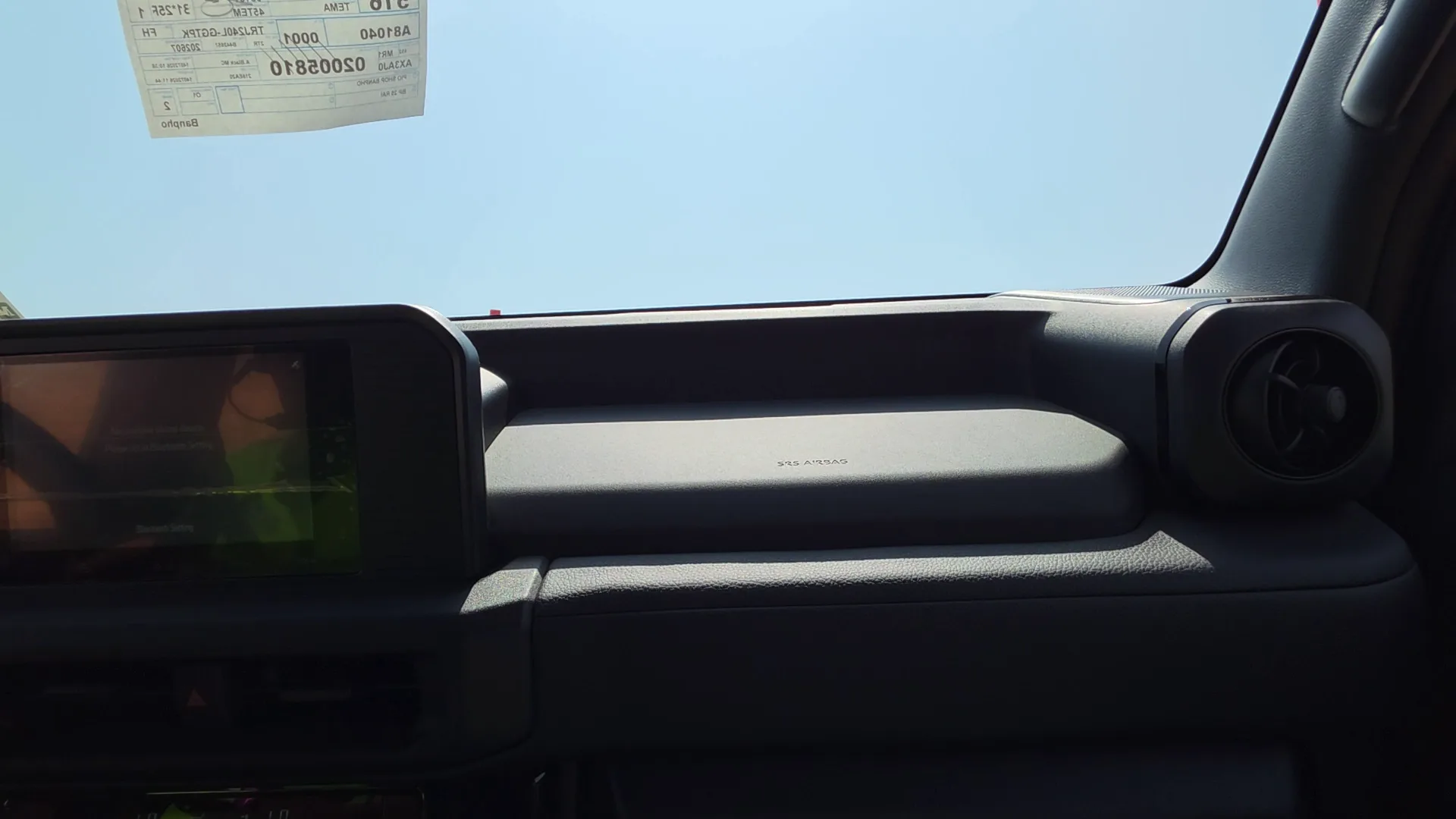
I once drove a Toyota Land Cruiser FJ up a hill so high and so steep that when the car tilted back, all I could see through the windscreen was sky. No road, no trees, no people. Just sky and a lot of faith.
That was at the launch of the Toyota Hilux and the FJ. What stayed with me wasn’t the speed, because there wasn’t much. It was the effort. You could feel the car shoving itself uphill.
So here’s the question that’s been bugging me ever since: was that horsepower, or torque? And if you’ve never cared about the difference, stay with me. By the end, you’ll win arguments at the next family gathering.
Torque: The Shove
Imagine pushing a stalled car. The first heave is the hard bit, and the strength of that heave is torque. Engineers measure it in newton-metres (N·m), but you don’t need the unit to get the idea. Torque is twisting force: how hard the engine can turn the wheels right now.
You feel torque when you pull away from a stop with a full car, climb a hill, or overtake a slow truck without changing gear. It’s the muscle.
Power: How Fast You Can Keep Shoving
Now imagine two people pushing that same car. One is a strongman who shoves with huge strength, slowly. The other is a sprinter who shoves with less strength, but resets and pushes again at lightning speed. The sprinter is power: how quickly the work gets done.
Power is measured in kilowatts (kW), and you’ll also hear horsepower (hp), the older, more famous name. One horsepower is about 0.75 kW, so one kilowatt is roughly 1.34 hp. Same idea, different ruler, like kilometres and miles.
Fun fact: horsepower goes back to James Watt, the engineer who tried to explain how strong his steam engines were by comparing them to horses. The story goes that he worked with ponies hauling coal, though historians disagree on exactly how he got his number. So think of it as a legend with a real figure inside.
The Plot Twist: The FJ Wasn’t a Monster
You’d expect something that climbs like that to have a roaring engine. It doesn’t. The FJ’s engine is a modest 2.7-litre petrol that makes about 120 kW (roughly 160 hp) and about 245 N·m. One reviewer even called the output modest.
So how did it conquer that hill?
Gears. The FJ has a special low-range setting, plus a lock that keeps the rear wheels turning together. Think of a bicycle on a steep road. You don’t pedal harder, you shift to the easiest gear. Each pedal turn is slower, but each turn pushes the bike with far more force. Low range does that for the car: it multiplies the engine’s shove before it reaches the wheels, and in exchange the car moves slowly.
That’s the real lesson. What carries a car uphill isn’t just the engine’s torque, but the torque at the wheels, which is the engine’s torque multiplied by the gearing. And climbing is a slow job. You need a big push, not a big top speed. That’s why it felt like torque, not horsepower.
So Why Do Cars Feel So Different?
Now you can see why a family pickup, a crawling off-roader and a screaming sports car feel like different species.
• Torque-heavy engines feel muscular the moment you touch the pedal. Great for loads, hills and traffic.
• High-revving engines make their power by spinning very fast. A Corvette Z06’s V8, for example, revs up to 8,600 rpm and makes about 500 kW (670 hp). That’s a bit like the sprinter, built to go fast, not to push boulders.
Neither is better. A sprinter can’t push a stalled lorry, and a strongman won’t win the 100 metres. They’re built for different jobs.
Why the Spec Sheet Is “Quiet”
When you see “120 kW” or “245 N·m” in a brochure, here’s what it’s not telling you:
• Those are peak numbers. Each happens at one engine speed. What you feel every day is the whole curve.
• Neither number tells the whole story. Weight, gearing and grip all change how fast a car actually goes.
• Units vary. Some brochures use kW, some hp, some “PS” (metric horsepower, about 1.4% smaller than hp). In this article, hp means mechanical horsepower. Always check which unit a number uses before comparing cars.
Nerd corner (skip if you like): power in kilowatts equals torque in newton-metres times engine speed in rpm, divided by 9,549. That’s why an engine making 250 N·m at 4,000 rpm gives about 105 kW (140 hp), and the same torque at 8,000 rpm gives about 209 kW (280 hp). Same shove, twice the speed, double the power.
Quick Quiz: Torque or Power?
1. Pulling away from the lights with a full load of passengers: torque.
2. Crawling a heavy load up a steep hill: torque (with a low gear’s help).
3. Reaching a high top speed on an open road: power.
4. Keeping a high speed against the wind: power.
Score three or more, and you officially understand cars better than most brochures.
The Bottom Line
Torque is the shove, power is how fast you can keep shoving, and gearing decides how much of the shove reaches the road. Next time someone throws a number at you, ask the follow-up question: at how many rpm? You’ll sound very clever.
Your turn: what’s the most impressive hill you’ve ever seen a vehicle conquer? Tell me in the comments.
Share this story
Comments
No comments yet. Be the first to share your thoughts.
The weekly
Enjoyed this one?
Subscribe for more like it, straight to your inbox.
The Day I Ignored My Dashboard (And Took a Trotro to Work)
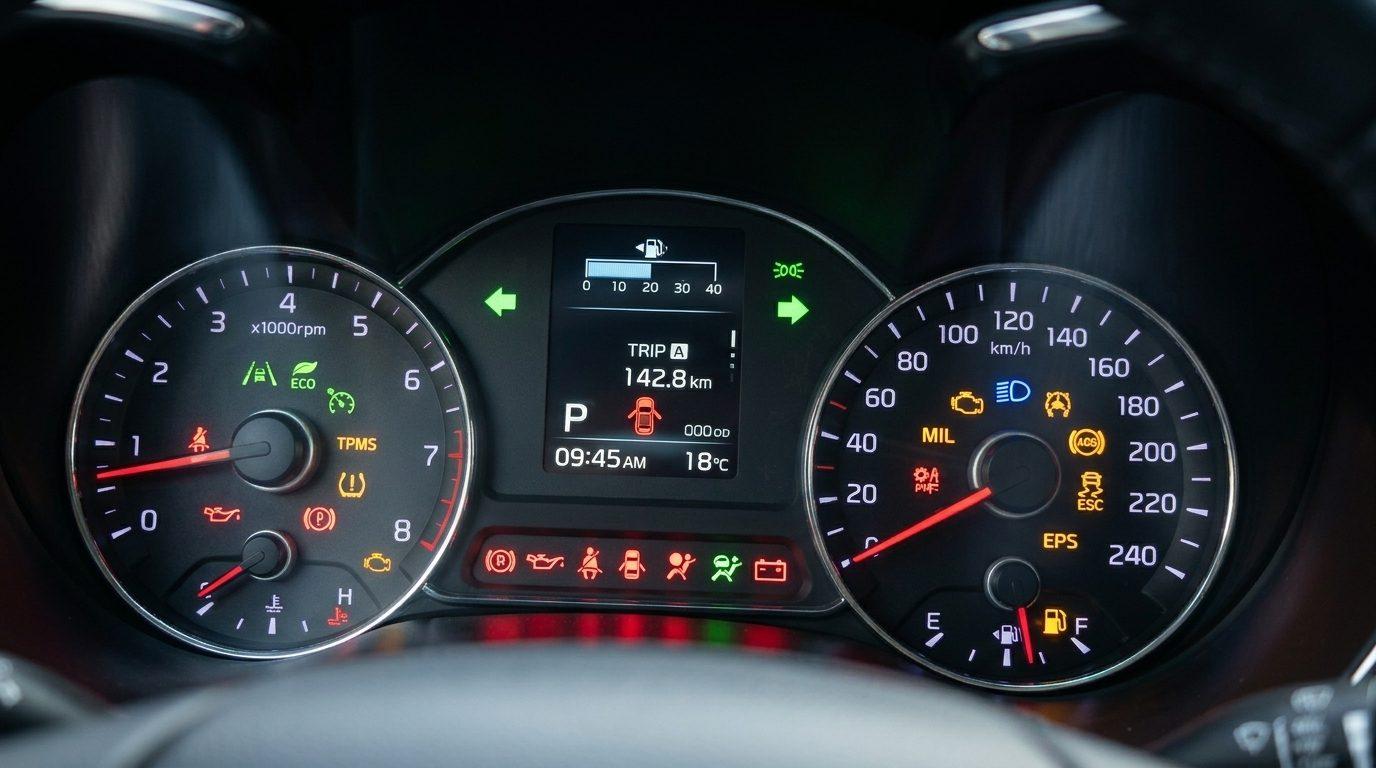
My car cranked and cranked before it started, then a battery light came on. I ignored both and paid for it the next day. Here’s how to read your dashboard before it costs you.


Comments
No comments yet. Be the first to share your thoughts.