The Day I Ignored My Dashboard (And Took a Trotro to Work)
My car cranked and cranked before it started, then a battery light came on. I ignored both and paid for it the next day. Here’s how to read your dashboard before it costs you.
Share
By Selorm Attatsi
One morning on my way to work, I turned the key and the car cranked. And cranked. And cranked and cranked before it finally started.
Did I worry? No. It started, didn’t it? Once it’s running, we’re good to go. That was my whole philosophy, and I drove off to work.
On the way, the battery light came on. I didn’t pay attention to it. I spent the day working. That evening, same story: long cranking, then it started, so all good. And if I’m honest, I didn’t have money for a new battery at the time, so I didn’t want to take my mind there.
The next morning, the car wouldn’t start at all. I did whatever I had to do to secure a battery, and that day I still had to take a Trotro to get to work. I ignored the signs my car was showing me, and I paid for it later.
So this article is the one I wish I’d read that week. Your dashboard has a language, and the basics take about two minutes to learn.
The Car Talks in Traffic Lights
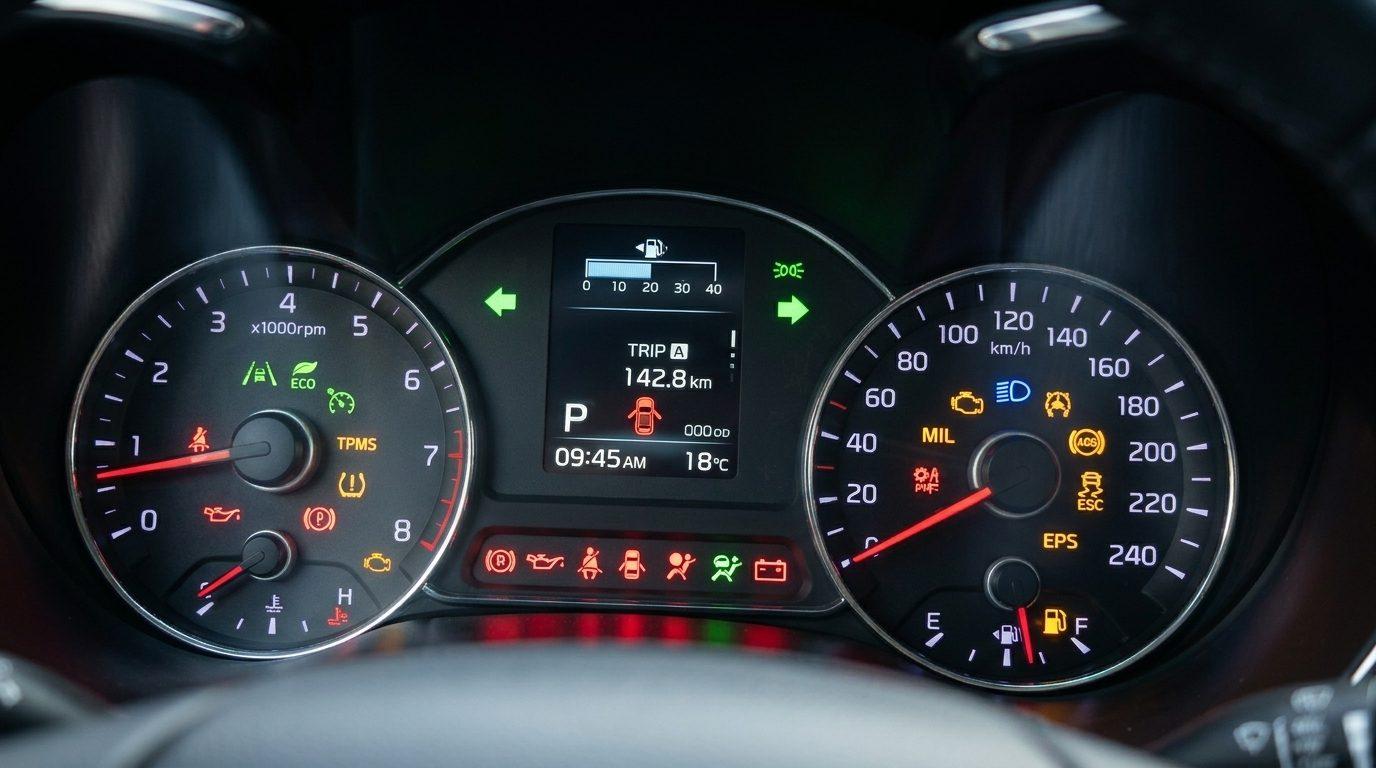
The simplest trick works like a traffic light. Red means there’s imminent danger and you should stop as soon as it’s safe, amber or yellow means a problem to check soon, and green or blue just means a system is on and working.
• Flashing is more urgent than steady. A flashing light of any colour is always more urgent than a steady one.
• Colours and symbols vary. The exact meaning differs between vehicles, so always check your owner’s manual.
And one comfort: it’s normal to see some lights briefly while you start the engine. That’s your car doing a quick roll call. It only matters if they stay on.
The Red Ones: Stop Safely
The battery (charging system). This is the one that got me. Despite the symbol, it doesn’t necessarily mean the battery itself is faulty. It may be a loose terminal, a failed alternator or a broken drive belt. The car will keep going, but only until the battery drains, so head somewhere safe rather than testing how far you can get.
And here’s the part I wish I’d known: the warning came before the light. A battery on its way out often shows up as an engine that cranks more slowly than usual, and you may only get one shot at a slow start before the engine refuses to crank at all. That was my morning, exactly.
One more lesson: because the light can point to either the battery or the charging system, it’s a good idea to test the battery, the charging system and the starting system before replacing anything. A fresh battery on top of a failing alternator can end up flat again.
The oil can (oil pressure). Pull over safely, turn off the engine and check the oil level. If the level is fine but the light stays on, the problem could be the oil pump or a blocked filter, and you shouldn’t restart the engine. Oil is the car’s blood supply: without pressure, parts rub together with nothing to cushion them.
The thermometer (engine temperature). If it comes on while you’re driving, stop immediately and turn the engine off. Likely causes include low coolant from a leak, or even a failed head gasket. And one safety rule that matters: never open the radiator or coolant cap while the system is hot, because pressurised hot coolant can cause serious burns. In our heat and traffic, it’s worth glancing at the temperature gauge on long jams.
The brake warning. It can light up simply because the parking brake is on, so check that first. But if it comes on while driving, your brake fluid may be low or a sensor may be faulty, and if it appears together with the ABS light, the brake system itself may be failing. If the pedal feels wrong, don’t drive on.
The airbag. This signals a fault in the airbag or seat-belt restraint system. The car will still move, but the safety system you hope never to use may not work, so get it checked promptly.
The Amber Ones: Book a Check Soon
The engine outline (check engine). This one scares everyone and is often misunderstood. Usually it’s safe to keep driving, though you should contact your mechanic soon. But watch the details: if the vehicle shakes or loses power, or the light is blinking, pull over. A flashing engine light means stop before you wreck the catalytic converter, an expensive part.
ABS. Your normal brakes still work, but the anti-lock feature may not. Keep your distance and take extra care when braking.
Tyre pressure. Check your tyres and refill them at the nearest service station. Low tyres waste fuel, wear out faster and make the car harder to control. Compare the pressure with the figure in your owner’s manual.
The Green and Blue Ones: Relax
These aren’t warnings. They’re messages that something is working. When your headlights are on, that light shows green, and the high-beam indicator is blue. Turn signals tick along in green, too.
Fun Fact
Modern cars are connected to up to 100 sensors that monitor everything from tyre pressure to engine temperature to door security. Your car is basically a very nervous group of tiny reporters, all keen to tell you something.
Quick Quiz: What Do You Do?
1. A red oil can lights up on the road: pull over safely and switch off.
2. A steady amber engine light, car driving normally: book a check soon.
3. A flashing engine light, car shaking: pull over, stop driving.
4. Your car cranks and cranks before it starts, then a battery light appears: don’t shrug it off. Get the battery and charging system tested.
5. A sticker over the light so you stop seeing it: please don’t. Covering a warning isn’t a repair.
The Bottom Line
Red means stop, amber means book a check, green and blue mean relax, and flashing means hurry. Small problems have a habit of becoming bigger and more expensive when we ignore them, and a Trotro ride is the cheap version of that lesson. If you’re unsure, take a photo of the light and ask a mechanic. Your car is talking. You just have to listen.
Your turn: Which warning light has given you the biggest scare? Tell me in the comments.
Share this story
Comments
No comments yet. Be the first to share your thoughts.
The weekly
Enjoyed this one?
Subscribe for more like it, straight to your inbox.
"I Could Only See Sky”: What a Steep Hill Taught Me About Torque
I drove a Toyota Land Cruiser FJ up a hill so steep I could see nothing but sky. Horsepower or torque? Here’s the difference, explained so anyone can follow.


Comments
No comments yet. Be the first to share your thoughts.